
Qingdao: a model of high-quality innovation
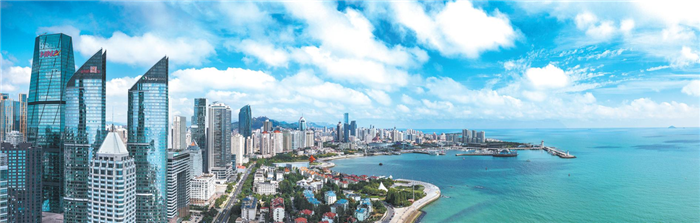
Enriched by its abundant marine resources, Qingdao flourishes with a thriving sea economy, breathtaking coastal landscapes, a lively urban culture and a high quality of life for its residents. ZHANG JIANHUA/FOR CHINA DAILY
During the 14th Five-Year Plan (2021-25), Qingdao in Shandong province has embraced a comprehensive strategy to stabilize growth, enhance quality and efficiency, and drive reform.
The city has consistently prioritized high-quality development, leading to a leap in its overall strength. The total retail sales of consumer goods have grown at an average annual rate of 6.4 percent, surpassing 650 billion yuan ($91.86 billion), ranking second only to Beijing among northern Chinese cities.
In terms of industrial development, Qingdao has established four clusters in smart home appliances, rail transit equipment, marine engineering equipment and instrumentation, which have been recognized as national advanced manufacturing clusters.
The city's ranking among China's top 100 advanced manufacturing cities improved from 11th in 2020 to sixth in 2024. The added value of its service sector has exceeded 1 trillion yuan, contributing an average of 65 percent to annual economic growth and becoming the primary driver of expansion.
As a major marine city, Qingdao's marine economy reached 550 billion yuan in 2024, ranking third among coastal cities nationwide and accounting for 33 percent of its GDP.
Iconic national marine projects have been commissioned, and Qingdao Port's cargo and container throughput ranked fourth and fifth globally in 2024, respectively.
Qingdao has promoted the development of a science and technology powerhouse.
Over the first four years of the 14th Five-Year Plan, research investment grew at an average annual rate of 11.6 percent, and the city's ranking in the global top 100 innovation clusters surged from 69th in 2020 to 34th this year.
Technological breakthroughs include the development of China's first 6,000-meter deep-sea observation buoy and a high-speed train prototype capable of reaching 400 kilometers per hour. The number of high-tech companies and tech-based small and medium-sized enterprises has grown substantially compared to the 13th Five-Year Plan (2016-20), with accelerated commercialization of cutting-edge technologies such as sulfide solid-state batteries and synthetic biology.
Talent attraction has also flourished. Of the eight new academicians in Shandong this year, six are based in Qingdao. The city's total talent pool now exceeds 3 million, an increase of 700,000 since the end of 2020.
Qingdao's capacity for opening-up has also been enhanced. Benefiting from national policies and trade zones, the "Invest in Qingdao "brand continues to gain prominence.
Urban-rural development has been a key focus. Qingdao has promoted rural vitalization and new urbanization in a coordinated manner, becoming the first city in Shandong to provide high-speed rail access to all counties. Meanwhile, its expressway mileage leads the province and the subway operation length has extended to 352 km, an increase of 106 km from the end of the 13th Five-Year Plan.
Urban renewal efforts have transformed 1,584 old residential communities and 260 urban villages. Additionally, 687 km of urban greenways, 378 pocket parks and 24 fitness facilities have been constructed or renovated.
Furthermore, Qingdao ranks among China's major cities in ensuring stable grain and agricultural product supply, with annual grain output exceeding 3.1 million metric tons.
The city has made tangible progress in environmental protection, with clearer skies, cleaner waters and a more beautiful landscape. It has been selected as China's first pilot city for green urban development and is among the first batch of national carbon peaking pilots.
Upholding a people-centered development philosophy, Qingdao has allocated over 70 percent of its fiscal expenditure to people's livelihoods. The per capita disposable income of urban and rural residents has kept pace with economic growth.
Moreover, the city's public services have become more high-quality and balanced, with 277 new, renovated or expanded primary and secondary schools and kindergartens.
The average life expectancy has increased to 82 years, and the historic urban area and Laoshan Scenic Spot have been included in China's preliminary list for UNESCO World Cultural Heritage Site applications.


 Play
Play  Play
Play 